


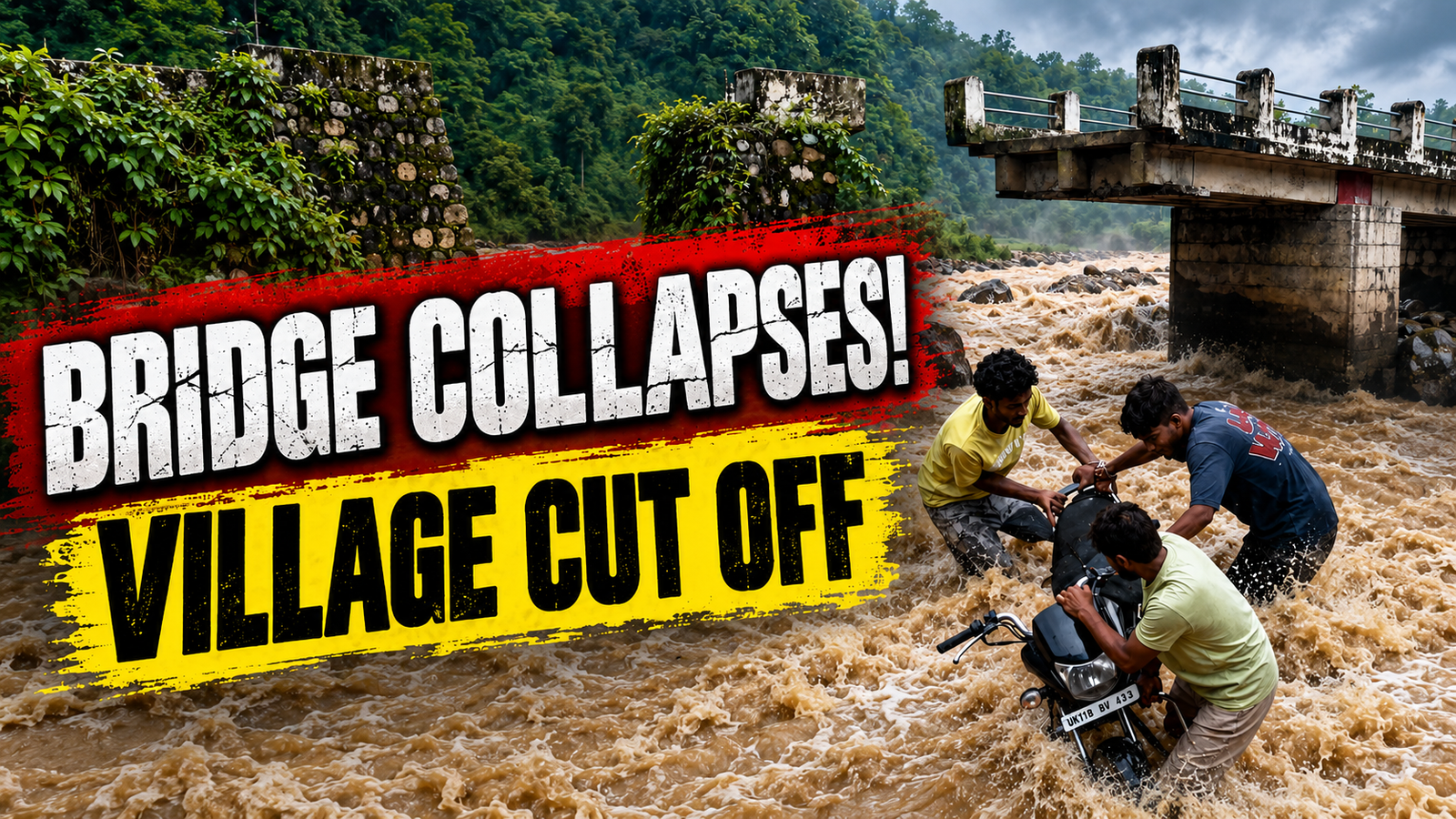
A sharp rise in water flow has damaged the key crossing between Manduwala and Sauda, disrupting daily travel for residents of the remote village.
INA Bureau | Dehradun
DEHRADUN: Heavy rain and a sudden rise in water flow have damaged a section of the bridge connecting Manduwala and Sauda, disrupting the main local route used by residents of Sauda for work, education, healthcare, markets and other essential needs.
Part of the bridge gave way after the seasonal stream swelled, leaving the crossing unsafe for normal movement. With water still flowing through the affected stretch, residents are facing difficulty using the route that connects the village with the wider road network.
For Sauda, the damaged structure is not simply a rural bridge. It is a vital link used for everyday travel.
Damage leaves Sauda residents facing daily disruption
The loss of the crossing has immediate consequences for people who rely on it.
Residents travelling to workplaces, schools, markets and healthcare facilities may now have to deal with a disrupted route while the affected stretch remains unsafe.
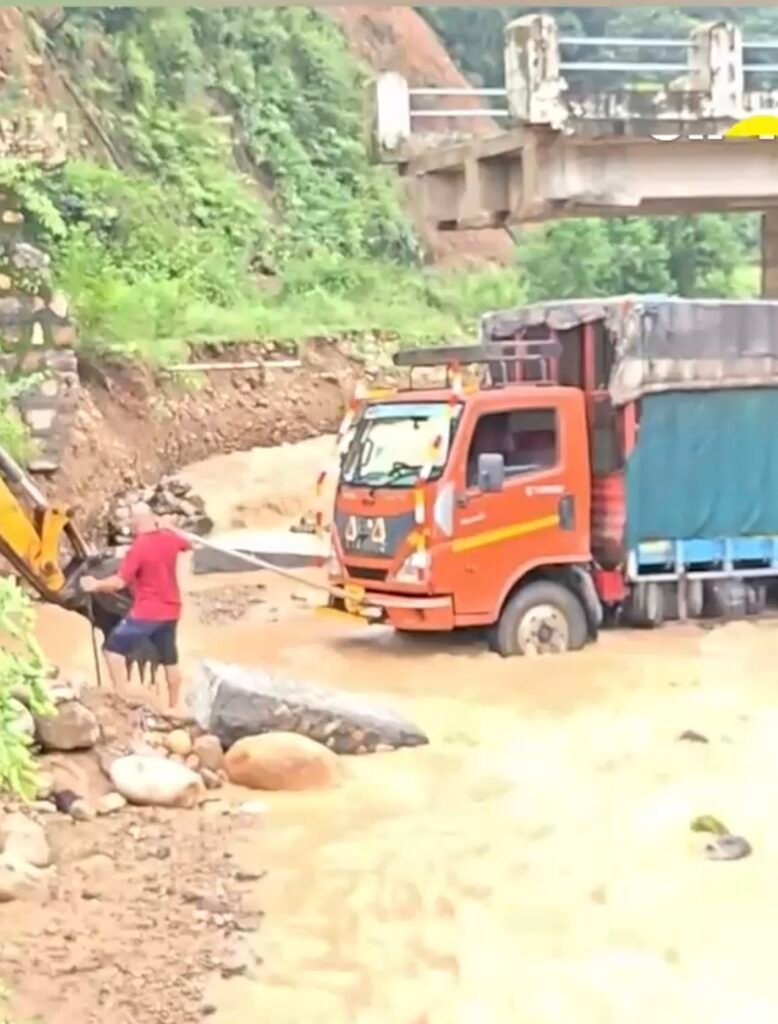
The problem could become more difficult if further heavy rain causes the water level to rise again.
For a remote settlement, even a single damaged bridge can have an outsized effect.
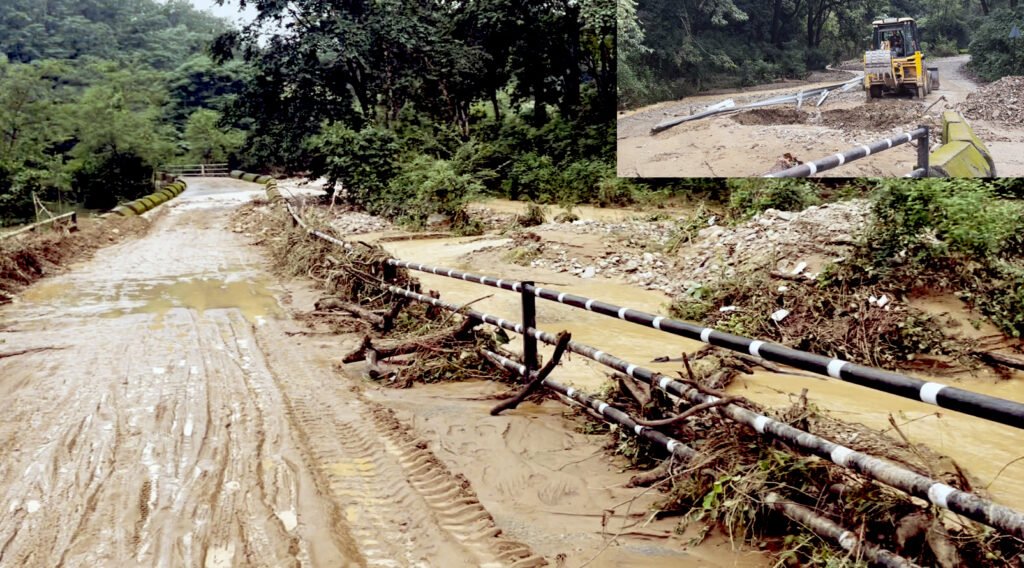
There may be no convenient alternative route, turning a local infrastructure failure into a wider access problem for the community.
Sahaspur MLA inspects the damaged crossing
Sahaspur MLA Sahdev Singh Pundir inspected the damaged bridge along with Forest Department personnel and reviewed the situation on the ground.
During the inspection, officials were directed to take necessary steps to repair the damaged section at the earliest and restore safe movement for villagers.
The inspection took place as monsoon-related disruption continued in parts of Dehradun district.
A local bridge reflects a wider monsoon problem
The Manduwala-Sauda damage comes amid continued heavy rainfall in Uttarakhand, where swollen water channels, landslides and damaged roads have disrupted movement in several areas.
The incident also illustrates how the consequences of heavy rain are not limited to major highways or prominent tourist routes.
In smaller settlements, damage to a single bridge can isolate residents from services and destinations they depend on every day.
That vulnerability is particularly important in remote villages, where local roads and crossings often serve as the only practical connection to larger roads and nearby facilities.
How the Sauda damage differs from Nanda Ki Chowki
The Manduwala-Sauda incident comes weeks after damage was reported at Nanda Ki Chowki, where heavy rainfall affected a road section associated with a newly opened bridge over the Tons River.
The two incidents are not the same and should not be treated as identical infrastructure failures.
At Nanda Ki Chowki, a preliminary inquiry pointed to upstream scouring and deficiencies linked to river diversion and river-training design. The Manduwala-Sauda case, by contrast, concerns the loss of a crucial village crossing following a sharp increase in water flow.
Still, the incidents raise a common question about the resilience of local infrastructure during periods of heavy monsoon rainfall.
For Sauda, restoring the route is the priority
The immediate need is to secure the damaged crossing, assess the extent of the damage and restore a safe connection for residents.
Any repair will also have to account for continued water flow through the stream, particularly while monsoon conditions persist.
For people in Sauda, the issue is straightforward: they need a reliable and safe route to the outside world.
A bridge may look small on a map. For the village that depends on it, it can be the road to school, work, a market or a hospital.
When that connection is damaged, the disruption reaches far beyond the bridge itself.
