


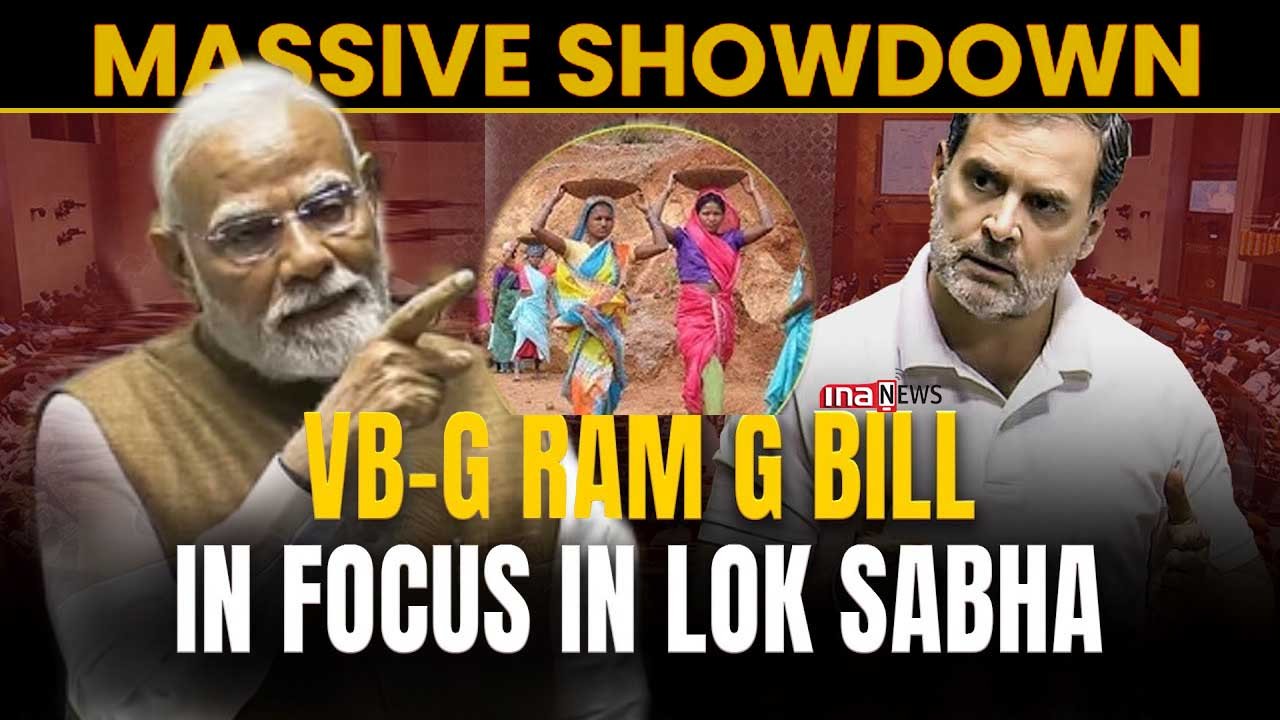
Opposition stages walkout, alleges dilution of rural employment rights as government pushes ‘Viksit Bharat 2047’ agenda
The Lok Sabha on Thursday passed the Viksit Bharat – Guarantee for Rozgar and Ajeevika Mission (Grameen) Bill, commonly referred to as the “G RAM G” Bill, amid intense uproar, protests and walkouts by opposition members. The legislation seeks to replace the Mahatma Gandhi National Rural Employment Guarantee Act (MGNREGA), a flagship rural employment scheme in place for nearly two decades.
The Bill was cleared during the winter session after a heated and limited debate. Opposition parties accused the government of dismantling a key rural safety net and undermining the rights-based framework that underpinned MGNREGA. As proceedings continued, several MPs entered the Well of the House, raised slogans and protested what they described as a “bulldozing” of parliamentary scrutiny.
Under the new law, the government has proposed an increase in guaranteed rural employment from 100 days to 125 days annually. The Centre has positioned the move as part of its long-term “Viksit Bharat 2047” vision, arguing that the revamped mission will be more targeted, technology-driven and fiscally sustainable.
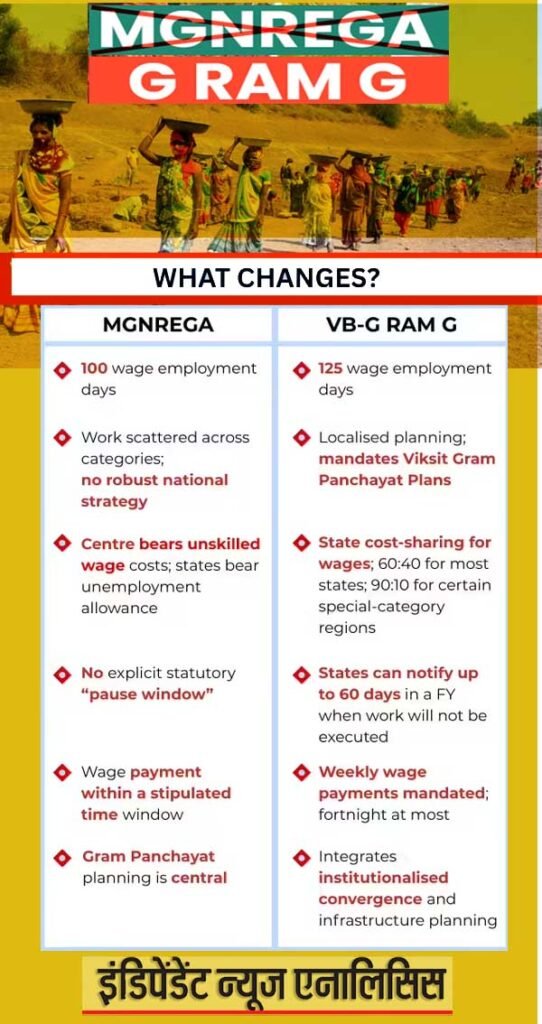
However, opposition leaders said the increase in workdays does not compensate for what they see as a fundamental shift away from a legal entitlement to employment. They alleged that the new framework gives the Centre greater control over implementation, potentially weakening the role of states and local bodies.
During the chaos in the House, opposition MPs accused the government of erasing Mahatma Gandhi’s legacy associated with the rural jobs programme. Some members reportedly tore copies of the Bill, while others staged an overnight protest on Parliament premises. Outside the House, an opposition MP said there had been “no serious consultation with states, workers’ organisations or independent experts” before bringing the legislation.
Rural rights groups also expressed strong reservations. The NREGA Sangharsh Morcha announced a nationwide day of action on December 19, with protests planned at national, state, district and local levels. The group has demanded the withdrawal of the Bill, arguing that it weakens legal safeguards available to rural workers.
Defending the legislation, government ministers said the new mission represents an evolution of rural employment policy rather than a rollback. They argued that G RAM G will focus not only on wage employment but also on skill development, asset creation and livelihood diversification. According to the government, this integrated approach will strengthen rural economies and improve accountability.
“We are not weakening rural India. We are strengthening it with more days of work, better assets and improved transparency,” a senior minister said during the debate.
Despite these assurances, concerns remain over funding adequacy, transparency and the impact on the poorest households. Activists have warned that greater reliance on technology could exclude workers with limited digital access or literacy. Others fear that the absence of strong legal guarantees, similar to those under MGNREGA, could make issues such as wage delays, arbitrary exclusions and local-level corruption more difficult to challenge.
With the Bill now cleared by the Lok Sabha, the political contest is expected to shift beyond Parliament. Opposition parties and worker collectives are preparing to take the issue to the ground, framing G RAM G as a test of the government’s commitment to rural welfare. The Centre, meanwhile, is likely to project the new law as evidence of its development-driven governance.
For millions of rural workers, the real impact of the legislation will become clear only with implementation, and whether the new scheme delivers more secure, timely and dignified employment than the programme it replaces.
