


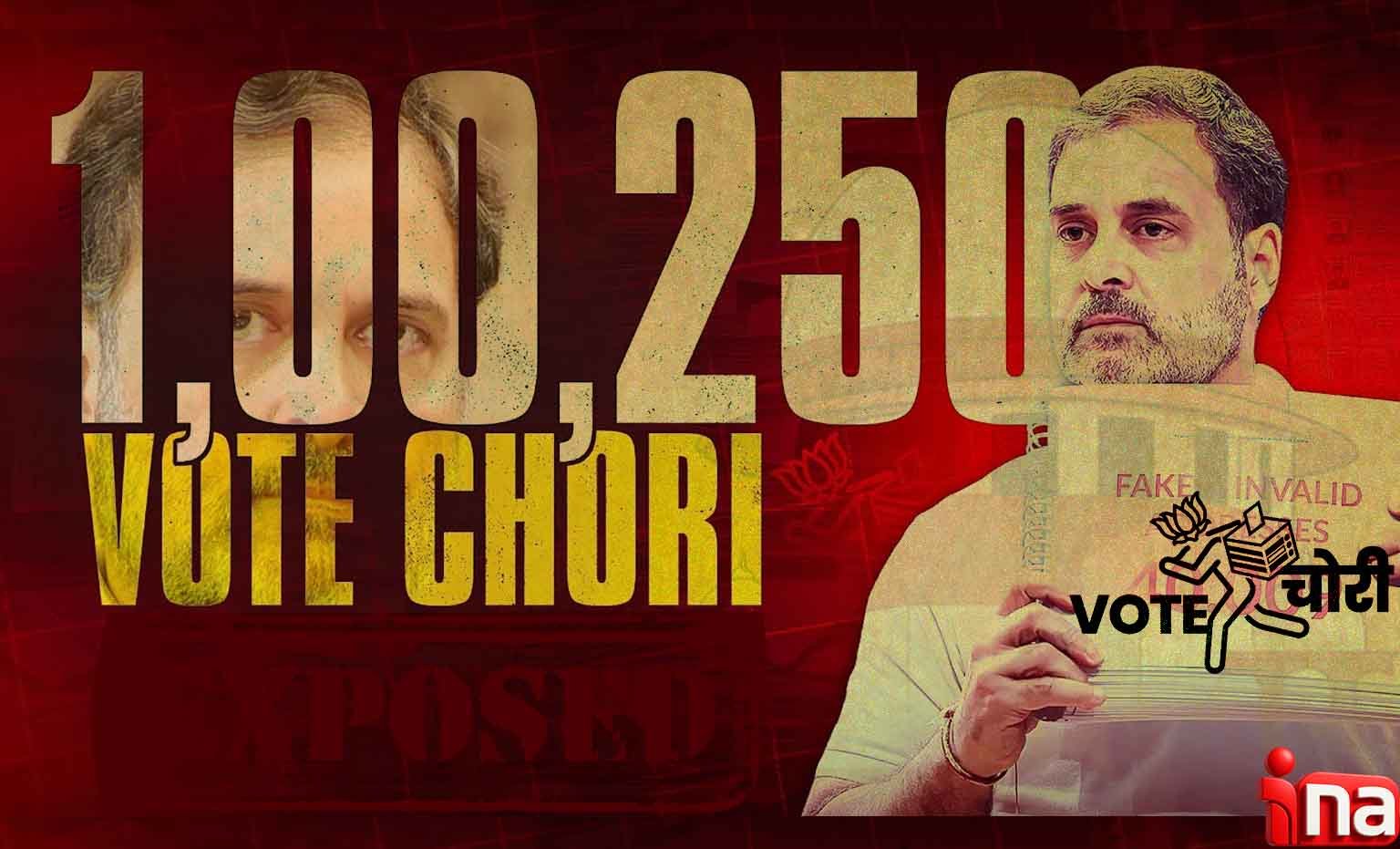
Congress alleges voter suppression and EVM tampering as Lok Sabha loss triggers deeper questions
In a heated political climate following the 2024 general election results, Rahul Gandhi has reignited a longstanding debate in Indian politics — election integrity. During a fiery address in Parliament, the Congress leader used the phrase “vote chori hui hai” (votes were stolen) to question the legitimacy of the Bharatiya Janata Party’s (BJP) victory in several constituencies. While the Congress-led INDIA bloc managed to limit the BJP’s national tally, it fell short of forming the government. Gandhi’s remarks, and the reaction they sparked, have once again drawn attention to India’s election infrastructure, the role of the Election Commission, and the credibility of Electronic Voting Machines (EVMs).
What exactly did Rahul Gandhi say?
On August 6, Rahul Gandhi addressed the Lok Sabha for the first time since assuming the post of Leader of the Opposition. Referring to the 2024 results, he claimed, “They (the BJP) lost the election. The people of the country did not vote for them. But through manipulation, intimidation, and vote theft, they are sitting in power.”
The phrase vote chori — or “vote theft” — resonated with opposition supporters and triggered sharp rebuttals from the ruling party. BJP leaders demanded that Gandhi provide evidence or withdraw his claims. However, Gandhi reiterated his stance, stating that Congress had compiled thousands of pages of proof related to alleged discrepancies and irregularities.
The deeper meaning behind the ‘Vote Chori’ charge
Gandhi’s remarks are not new in Indian political discourse. The opposition has long questioned aspects of the electoral process, especially after the introduction of EVMs. The Congress party’s 2024 campaign focused heavily on themes of institutional capture, voter suppression, and lack of electoral transparency — all of which resurfaced in Gandhi’s speech.
The phrase vote chori is being interpreted in multiple ways:
- Symbolic Allegation: Gandhi’s comment may reflect a broader critique of how the electoral system is influenced by money power, misuse of state machinery, and media control, rather than a direct accusation of ballot manipulation.
- Targeted Critique: It also suggests that in specific constituencies, alleged malpractice — including deletion of opposition-leaning voters, misreporting, or discrepancies in VVPAT counting — may have tipped the balance in the BJP’s favour.
Opposition’s narrative: Weaponizing ‘Electoral Manipulation’
The INDIA bloc, particularly Congress, has repeatedly framed the BJP’s electoral success as a product of institutional erosion. This includes accusations of:
- Voter list manipulation: Complaints were filed during the Special Summary Revision (SSR) process in states like Bihar and Uttar Pradesh. Opposition parties claimed that names of minority and Dalit voters were selectively deleted.
- EVM concerns: While India’s Election Commission has defended EVM integrity, doubts continue to be raised, especially about transparency in VVPAT (Voter Verified Paper Audit Trail) matching.
- Election Commission’s neutrality: The delay in releasing final voting data and the opacity around Form 17C (vote counting records) were also cited as reasons to doubt the fairness of the process.
BJP’s response: ‘Sore loser syndrome’
Top BJP leaders hit back at Rahul Gandhi’s claim, accusing him of undermining democratic institutions and spreading conspiracy theories. Home Minister Amit Shah stated in Parliament that the BJP had “won fair and square” and that the INDIA bloc was suffering from “sore loser syndrome.”
Union Minister Smriti Irani challenged Gandhi to name the seats where vote chori allegedly occurred and submit the evidence to the Election Commission.
If you’re claiming voter fraud, bring the data. Otherwise, apologise to the people of India
Union Minister Smriti Irani
Why does this debate matter?
India’s democracy is the largest in the world. Allegations such as vote chori have far-reaching implications:
- Trust in electoral process: Raising doubts about vote counting and EVMs — without conclusive evidence — can lead to erosion of public trust.
- Institutional accountability: It also pressures bodies like the Election Commission to improve transparency, including public release of final vote tallies and Form 17C records.
- Polarisation: Such claims can deepen political divisions, particularly in an environment where misinformation spreads quickly on social media.
Can elections be manipulated in India?
The Election Commission of India maintains that the use of EVMs and VVPATs ensures fair, tamper-proof elections. However, critics point out loopholes:
- Delayed data disclosure: The delay in releasing voter turnout data after polling sparked suspicions in several states during the 2024 Lok Sabha elections.
- Form 17C opacity: This critical document records vote counts at the booth level. Activists and opposition parties have demanded its public release to allow independent verification.
- Lack of comprehensive audits: VVPAT slip counting is currently limited to five randomly selected booths per Assembly segment, which many believe is statistically insufficient.
Election Commission Responds
The Election Commission has not issued a formal statement on this latest charge as of the time of publishing. However, in past instances, the EC has reiterated that EVMs used in Indian elections are standalone devices and cannot be tampered with remotely or wirelessly.
They maintain that the machines are secure, tested, and backed by protocols that include VVPAT verification.
The larger political signal
By framing the BJP’s win as a product of vote chori, the Congress leadership is aiming to energise its base and delegitimise the ruling party’s mandate. This is also a strategic move to shape the narrative ahead of the upcoming Assembly elections in states like Maharashtra, Haryana, and Jharkhand.
It’s clear that the ‘vote chori’ phrase is more than just a rhetorical flourish — it reflects deeper unease with the credibility of the electoral process. Whether this claim results in institutional reform or political gain for the opposition remains to be seen.
